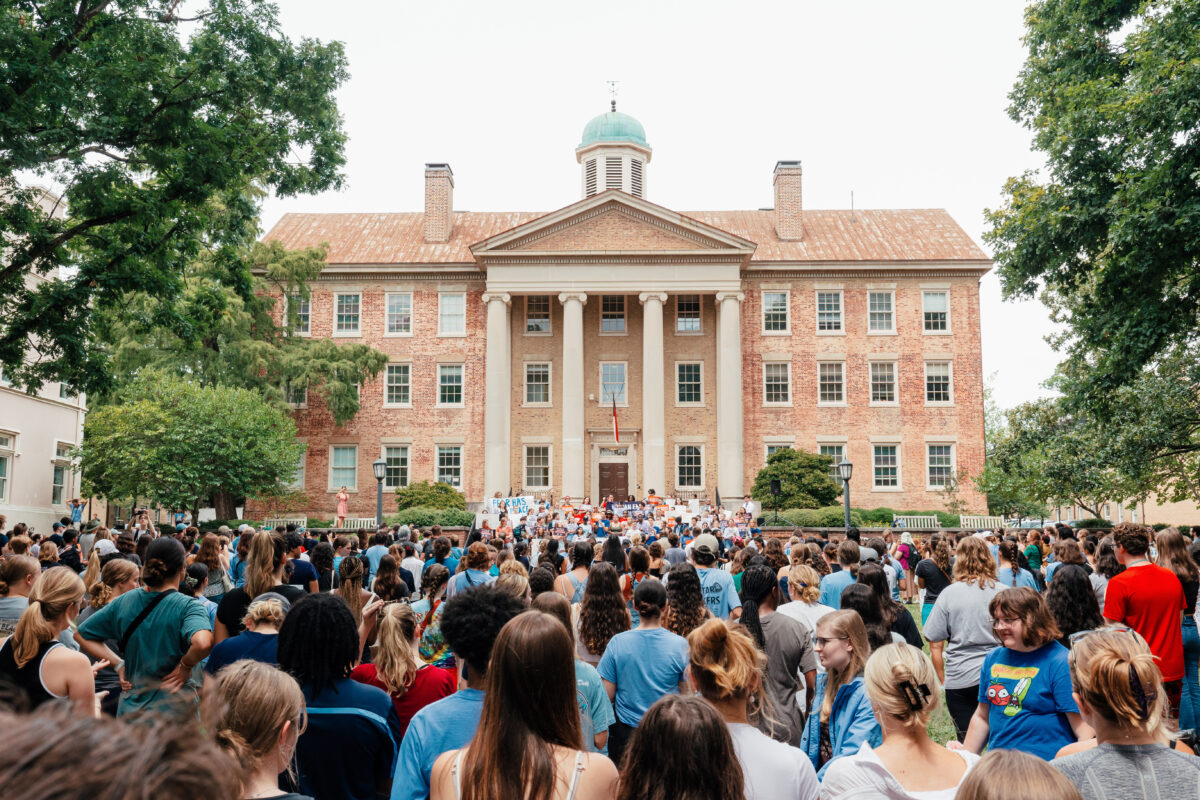
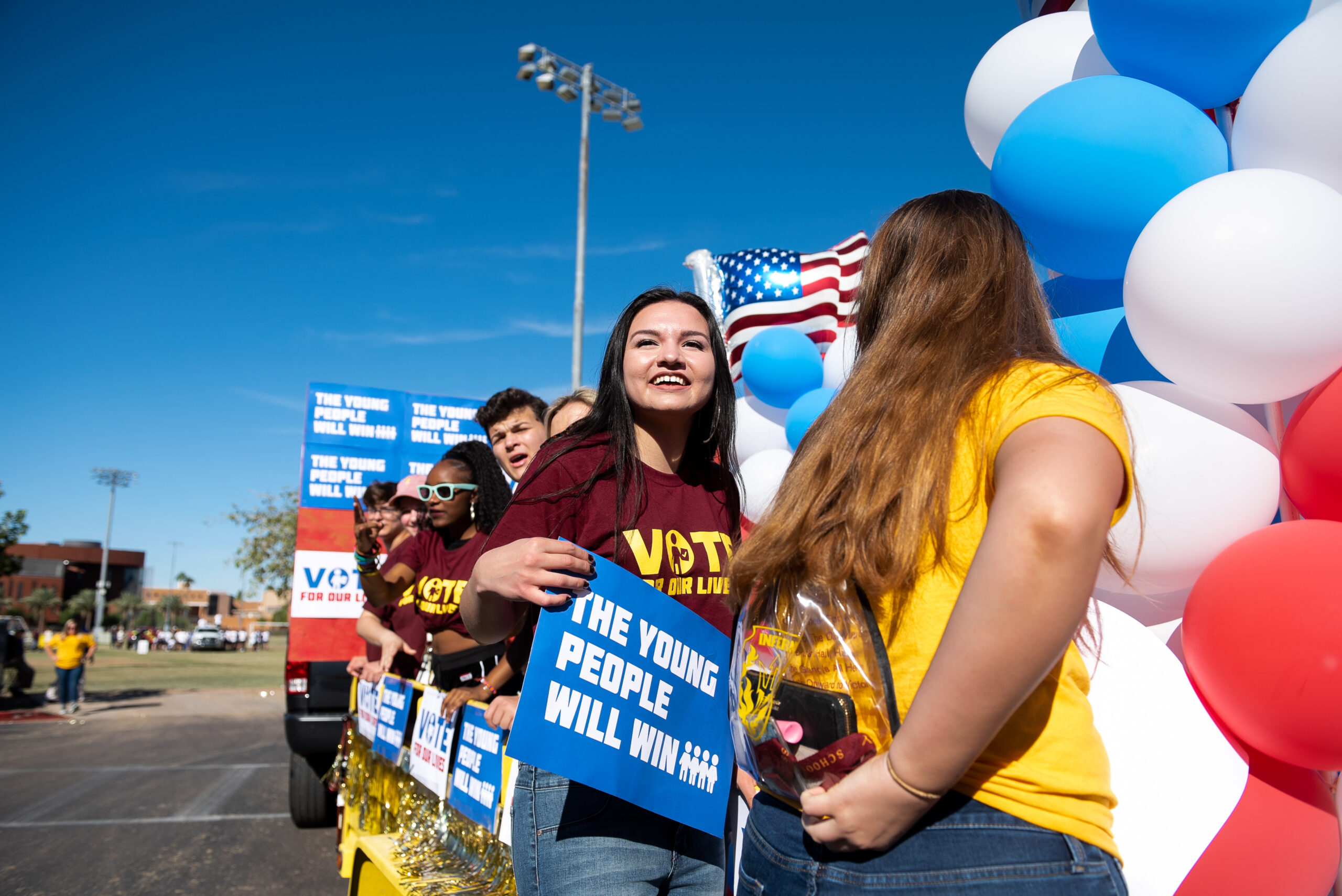
Ending gun violence requires all of us working together — in our communities, our schools, and at the ballot box.
Gun violence is not inevitable. It is the result of choices, policies, and priorities that can be changed. When we vote, we decide what kind of country we want to live in: one that accepts gun violence as normal, or one that invests in safety, prevention, and care for every community.
Every ballot is an opportunity to stand up for lives over profit, for safety over fear, and for action over indifference. Your vote is your power to help end this crisis.
Check Your Registration.
Even if you’ve registered before, it’s always worth double checking. Voter rolls are regularly updated, and names can be removed or moved for many reasons — a change of address, a name update, or a simple clerical error. Whether you’ve moved, started school in a new place, or just want peace of mind, take a minute to confirm your registration so you’re ready to vote when it counts.
Register to Vote.
Registering to vote is quick, easy, and one of the most powerful ways to make your voice heard. Whether you’ve just turned 18, moved to a new address, or need to update your information, it only takes a couple of minutes to get it done.
Find Your Polling Place.
Once you’re registered, make a plan to vote.
Every voter is assigned a specific location to cast their ballot, which may change from year to year depending on where you live. Use a trusted, nonpartisan source to look up where and how to vote in your area, including early voting and mail options.
FAQ
Whether it is your first time voting or your twentieth, everyone has questions about the process. We have included answers to some of the most common questions below, such as how to register, what identification you might need, and where to cast your ballot.
If you have a question that is not listed here, you can find reliable information by contacting your local election office or visiting a trusted nonpartisan resource online.
1. Confirm your registration. Make sure you are registered and that your information is up to date. You can do that at the top of this page.
2. Find your polling place. Know where you will cast your ballot. Polling locations can change, so look yours up before Election Day.
3. Choose your voting time. Add it to your calendar so you do not forget.
4. Plan how you will get there. Decide whether you will walk, drive, take public transportation, or need a ride.
5. Review your ballot. Check what will appear on your ballot through your local election office or its website. Many states allow you to bring a printed copy of your notes with you.
6. Bring the right identification. Requirements vary by state. You can find detailed information on trusted nonpartisan sites such as Rock the Vote.
7. Vote. Cast your ballot and encourage your friends and family to do the same.
8. Celebrate civic engagement. Wear your sticker proudly and share the moment to inspire others to participate.
Early voting rules vary across the country. Many states offer early in-person voting or vote-by-mail options, while others only allow voting on Election Day. To find out what applies where you live, visit a trusted nonpartisan resource such as Rock The Vote for up-to-date information about your state.
Voting by mail is a safe and secure way to participate if you are unable to vote in person. Many states allow voters to request a mail ballot for reasons such as travel, school, work, or accessibility needs. Because mail-in voting rules and deadlines vary by state, check with your local election office or a trusted nonpartisan source to find the most up-to-date information for where you live.
1. Both in-person and mail-in voting are trusted methods. Voting in the United States has a long history of reliability. Election systems include multiple layers of security to protect every ballot and ensure that each vote is counted accurately.
2. Voter fraud is extremely rare. Before any ballot is counted, election officials verify each voter’s identity and eligibility. Instances of voter fraud are exceedingly uncommon, and when they do occur, they are investigated and prosecuted by the appropriate authorities.
3. Voting by mail has a long history. Mail-in voting began during the Civil War, when soldiers were given the ability to vote from the battlefield. Today, millions of Americans safely cast their ballots by mail in every election, including U.S. troops overseas. Several states now conduct most or all of their elections by mail, with proven security and accessibility.
4. Mail ballots go through detailed verification. Mail ballots are validated through several steps once returned. Election officials use safeguards such as signature matching and barcode tracking to confirm voter eligibility before separating ballots from their envelopes for counting. Only ballots that meet all requirements are included in the final tally.
5. Polling places also include verification measures. At in-person voting sites, poll books indicate whether a voter has already received or returned a mail ballot. If any discrepancies arise, voters are given a provisional ballot that is counted only after verification. This process ensures that every eligible voter can cast one secure ballot and that every valid vote is counted once.
Voter registration age requirements vary by state. In most states, you can register to vote if you will be 18 years old by the date of the next election. Some states allow individuals as young as 16 or 17 to pre-register so they are automatically added to the voter rolls when they turn 18.
To learn the specific requirements where you live, visit a trusted nonpartisan resource such as Rock the Vote’s Election Center for state-by-state eligibility details.
Young people have an enormous stake in the decisions being made today. Registering and voting ensures that your voice and your generation’s priorities are represented in shaping the future.
Identification requirements vary by state. Some states require an ID when you register to vote, others when you cast your ballot, and some do not require an ID at all.
As part of your plan to vote, review the rules for your state to make sure you bring the correct documentation. You can find up-to-date information through trusted nonpartisan resources such as Rock the Vote’s Election Center.
Yes. Students have the right to register to vote using either their school address or their permanent home address. If you live in a dorm, that address counts as your residence for voting purposes.
If you receive mail at a Post Office box, your state may ask you to confirm your physical address through an affidavit or a letter from your college’s housing or residential life office. Requirements vary by state, so check with your local election office or a trusted nonpartisan resource such as Rock the Vote’s Election Center for more detailed information.
Wear that sticker with pride. You’ve earned it. Then, encourage your friends, classmates, and family to make their voices heard too. Every person who votes helps build a stronger democracy and a safer future for all of us.
Your vote matters. It is one of the most powerful tools we have to create change, protect our communities, and build a country where safety and care are the norm.
There are so many ways to make a difference right now! March For Our Lives was founded by students, most of whom were under 18, and our movement continues to include leaders as young as elementary school. You do not have to wait to use your voice or take action.
Here are a few ways to get involved:
1. Encourage others to vote. If there are people in your household who are eligible to vote, share this page with them. Ask if they have checked their registration, made a plan, and know where to vote.
2. Help friends get to the polls. If you can drive and have friends who are voting, consider offering them a ride. Turn up the music and help make voting day a celebration.
3. Spread the word. Text your friends who are 18 or older and remind them to register and make their voting plan. Sometimes all it takes is one reminder from someone they trust.
4. Join March For Our Lives. Become a member of MFOL and take action in your community. Voting is one important way to make change, but it is not the only one. Together, we are building the future — starting now.
Yes. Every eligible citizen has the right to vote, even without a permanent address. When you register, you will be asked to provide an address so election officials can assign you to the correct voting districts and send any election-related mail.
If you are experiencing homelessness, you can typically use the address of a shelter, a friend or family member’s home, or a location where you regularly stay — such as a street corner, park, or intersection.
For more detailed guidance, visit a trusted nonpartisan resource such as Nonprofit Vote to learn about the specific requirements in your state.