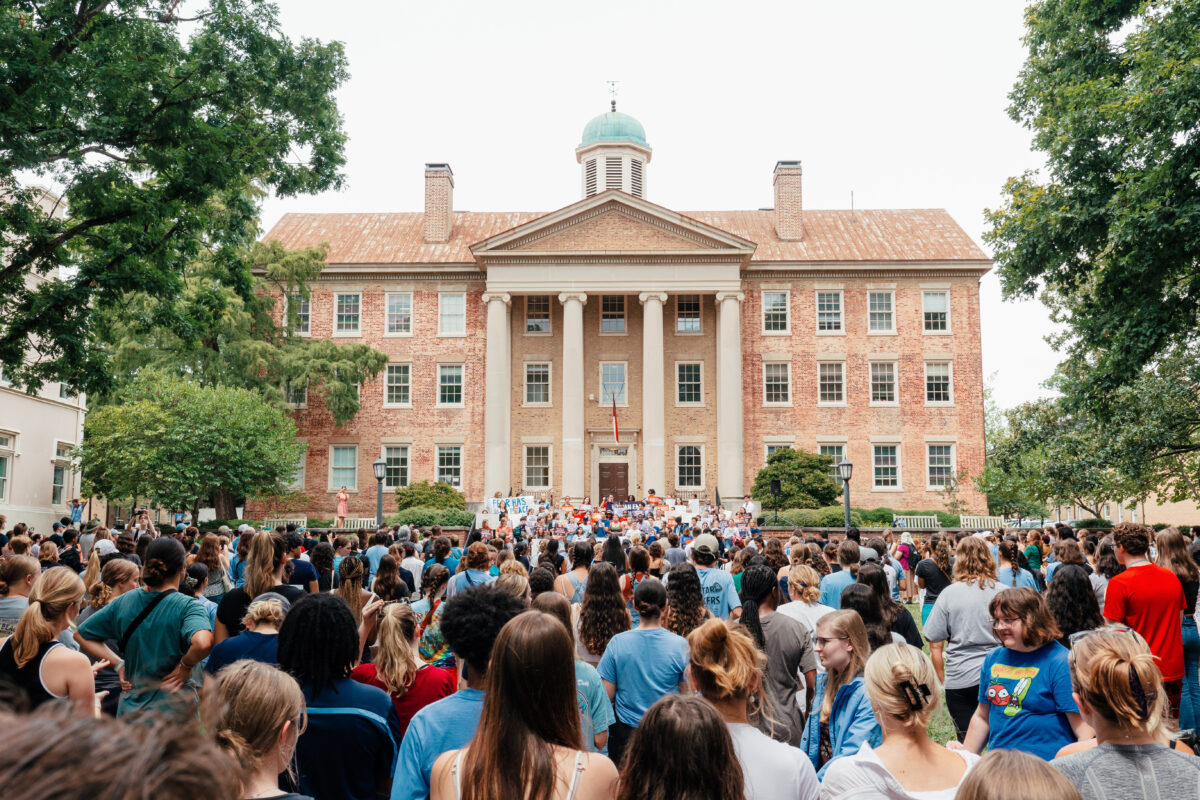
Confront Apathy
We confront apathy by forcing the nation to see what it’s tried to ignore.

Behind every statistic is a person.
Gun violence has become so commonplace in America that it’s easy to grow numb to the headlines. Another shooting. Another community grieving. Another round of thoughts and prayers before the country moves on.
But for the people whose lives have been forever changed by gun violence, the story doesn’t end when the headlines fade.
At March For Our Lives, we’re working to change how America sees, understands, and responds to gun violence. By elevating the voices of survivors, families, and young people, we bring the human consequences of this crisis into focus and challenge the idea that gun violence is simply a fact of life.
We believe stories have the power to change hearts, shift culture, and inspire action. And we believe the people closest to this crisis should be at the center of the conversation about how to end it.
Changing the Conversation Around Gun Violence.
Statistics can show us the scale of America’s gun violence crisis. Stories help us understand what those numbers actually mean.
We work with survivors, families, filmmakers, artists, and cultural partners to bring these experiences to audiences far beyond traditional advocacy spaces. Through documentary films, digital storytelling, creative campaigns, and personal testimony, we make room for people to share their experiences in their own words.
Our work challenges the way gun violence is often portrayed in the media, where lives are reduced to numbers and entire communities disappear from the conversation once public attention moves elsewhere.
We use our national platforms and partnerships to reach new audiences, encourage empathy, and create opportunities for people to turn what they’ve learned into action.
Above all, we want to build a culture that refuses to look away.
Our Storytelling in Action:
All the Empty Rooms
Honoring the children whose lives were cut short by school shootings.
What happens to a child’s bedroom after they’re killed in a school shooting? In the Academy Award-winning documentary short All the Empty Rooms, journalist Steve Hartman and photographer Lou Bopp visit families across the country who have preserved the bedrooms of children they’ve lost.
The film offers an intimate portrait of grief, memory, and the lives behind America’s school shooting statistics.
As an advocacy partner, March For Our Lives helped bring the documentary’s message to new audiences, sharing the film and its accompanying photography campaign across our national platforms. Through digital storytelling and outreach, we helped extend the conversation beyond the screen and remind viewers of the lives and families at the heart of this crisis.
Watch All the Empty Rooms on Netflix
Survivor-Led Digital Storytelling
Giving young people a platform to tell their own stories.
No one understands the consequences of gun violence better than those who have experienced it firsthand. Yet too often, survivors and young people are spoken about rather than listened to.
Through our ongoing digital storytelling series, we create space for survivors and young people affected by gun violence to speak directly to audiences about their experiences, perspectives, and hopes for the future.
These videos are personal, unfiltered, and grounded in the voices of the people sharing them. Distributed across our social media platforms, they reach audiences across the country, bringing experiences that might otherwise go unheard into the public conversation.
By putting young people at the center of their own stories, we’re challenging assumptions about who experiences gun violence and ensuring that those most affected have a voice in shaping the national conversation.


The Living Record
Every life is more than a headline. Every story deserves to be remembered.
Behind every death from gun violence is a person who was loved, a life filled with memories, and a community forever changed.
The Living Record is an ongoing storytelling archive created by March For Our Lives to preserve the experiences of people affected by gun violence. Through personal reflections, photographs, and tributes, families, survivors, and communities can share their stories in their own words.
The archive creates space to remember loved ones lost, reflect on the lasting impact of violence, and honor the people whose lives and experiences deserve more than a fleeting moment of public attention.
We also work with contributors who wish to share their stories more broadly, helping their voices reach audiences across our national platforms.
The Living Record is both a space for remembrance and a reminder that the human impact of gun violence extends far beyond the headlines.
30 Under 30
A tribute to 30 young people who never got the chance to turn 30.
Every year, prominent publications celebrate young entrepreneurs, artists, and leaders through their “30 Under 30” lists. These features recognize extraordinary accomplishments and the promise of what comes next.
But what about the young people whose futures were taken before they had the chance to pursue their dreams?
March For Our Lives joined Change the Ref and other partners to support 30 Under 30, a special-edition magazine honoring 30 young people killed by gun violence.
Created in collaboration with their families, the publication shares the stories of students, artists, siblings, friends, and future leaders. It celebrates who they were, what they loved, and everything they might have become.
By reimagining a familiar cultural tradition, the project challenged audiences to confront the futures stolen by gun violence and reminded the country that every young life deserves the opportunity to grow older.
Stories Can Change What Comes Next.
Gun violence leaves an impact that extends far beyond the moment a shooting occurs. It changes families, classrooms, neighborhoods, and entire communities. And those consequences deserve sustained public attention.
Through storytelling, we’re challenging the indifference that allows this crisis to continue. We’re creating space for grief, remembrance, resilience, and hope, while bringing more people into a movement committed to ending gun violence.
Because the stories we tell shape what we value, what we refuse to accept, and what we’re willing to change.
We refuse to let America look away.